

Stair-Step Cracks in a brick wall often show that part of the masonry has moved and the brittle mortar joints have opened under stress. The stepped shape is a useful clue, but it does not identify the cause on its own. This guide explains what the pattern can mean, which warning signs deserve prompt attention and when crack stitching may form part of an appropriate repair.
Cracks should be judged in context. Their position, width, direction, age and rate of change all matter. Conditions around the property, such as drainage, recent building work and sticking doors or windows, can also help a suitably qualified professional understand what is happening.
What do Stair-Step Cracks look like?
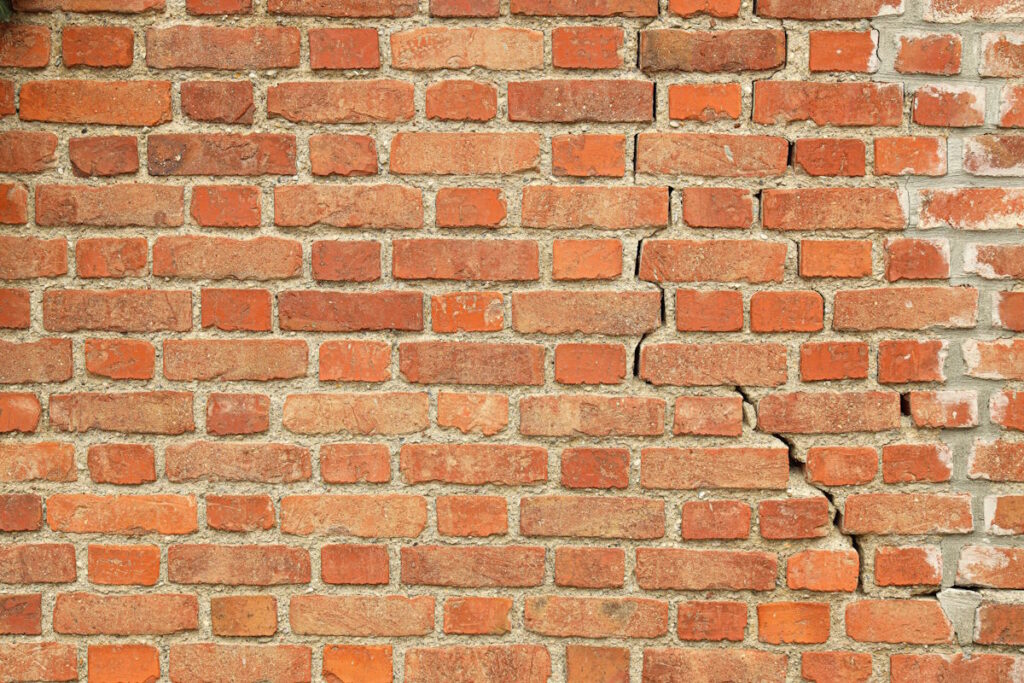
The crack follows horizontal and vertical mortar joints, creating a stepped or zigzag line through the brickwork. Mortar is often the path of least resistance, so movement within a wall may become visible there before it breaks directly through the bricks.
The pattern may appear on an external or internal masonry wall, often around a window or door. It can run upwards from a corner or diagonally across a wall. Plaster and paint may conceal its route through the underlying masonry.
Do not rely on appearance alone to label a crack as cosmetic or structural. A thin line that has remained unchanged for years presents a different question from a crack that is widening, extending or appearing with other signs of movement.
What usually causes the stepped pattern?
Stair-Step Cracks generally mean that different parts of the wall are no longer moving together. The reason for that movement must still be established before a repair is selected.
Common possibilities include:
- Differential foundation movement, where one section of a building moves more than another
- Settlement in a newer building or movement linked to changing ground conditions
- Poor stormwater management, leaking drainage or erosion affecting soil near foundations
- Movement around a window or door opening, including problems associated with the supporting lintel
- Thermal or moisture-related expansion and contraction in masonry materials
- Alterations, added loads or removed supports that change how forces pass through the structure
- Deterioration, poor workmanship or an earlier repair that treated the surface but not the cause
South African properties stand on varied ground conditions and face different rainfall and temperature patterns. A photograph may not reveal drainage defects, foundation conditions, previous alterations or concealed cracking, so assessment should be site-specific.
Do Stair-Step Cracks mean structural movement?
They can indicate structural movement, but they do not automatically mean the wall is unsafe or that the building has a major foundation failure. Masonry has limited ability to stretch. When stress exceeds what the brick-and-mortar assembly can accommodate, a crack can form along the joints.
The important questions are whether movement is active, what caused it and whether the wall remains sound. A stable crack may require a different response from one that repeatedly reopens.
The NHBRC’s home inspection guidance states that foundations should transmit building loads without excessive movement or distress in the elements they support. It also notes that walls should withstand expected loads without undue deformation or distress. These principles help explain why visible cracking should be assessed as part of the whole structure rather than treated as an isolated line in the mortar.
Did you know? SANS 10400-K applies the National Building Regulations to walls and covers masonry walls, movement joints and lintels, among other matters.
Warning signs that deserve prompt assessment
Some cracks are more concerning because of how they behave or what appears alongside them. Arrange a professional assessment if the crack is growing, returning after repair or accompanied by distortion elsewhere in the building.
Look for:
- A noticeable increase in length or width
- A crack that is wider at one end than the other
- The same cracking visible on both sides of a wall
- Doors or windows that have started sticking or no longer sit square
- Sloping floors, separated skirtings or gaps at ceilings and wall junctions
- Bulging, leaning or displaced brickwork
- Cracking below the damp-proof course or close to foundation level
- Water pooling near the building, damaged gutters, leaking pipes or defective drainage
- Several cracks developing in the same area
Published NHBC guidance on cracking in homes advises that diagonal or stepped cracking should receive further attention. It is not a South African regulation, but reinforces that crack shape and behaviour matter alongside width.
If the wall appears unstable, bricks are loose, movement is rapid or there is any immediate safety concern, keep people away from the affected area and obtain urgent professional advice. For active, severe or unexplained movement, consult a suitably qualified structural engineer. The Engineering Council of South Africa’s registered-persons resource can help property owners check professional registration.
How should a cracked brick wall be assessed?
A good assessment starts with evidence. Record when the crack appeared, photograph it clearly and note changes to nearby doors, windows, floors or finishes. Where safe, include a ruler for scale.
The assessment may consider:
- Whether the crack passes through mortar joints, bricks, plaster or several materials
- Whether it is visible internally, externally or on both sides
- Its location in relation to corners, openings, lintels and foundations
- Recent additions, renovations, excavations or changes in loading
- Roof drainage, ground falls, plumbing leaks and stormwater routes
- The age and construction type of the building
- Whether movement is ongoing or appears to have stabilised
Monitoring can show whether the opening is changing, but it is not a diagnosis. Further investigation may be needed where foundations, drainage, lintels or concealed construction could be involved.
Avoid grinding out and filling the mortar before the crack has been properly recorded. A cosmetic repair can hide useful evidence and may fail again if the underlying movement continues.
When can Stair-Step Cracks be repaired with crack stitching?
Crack stitching is a masonry reinforcement method in which helical bars are installed across a fracture within prepared slots and bonded with grout. The bars reconnect masonry across the crack and help distribute loads into the surrounding wall. Thorhelical South Africa describes its system as combining helical bars with WHO60 grout for cracked-wall reinforcement.
This approach may be considered once the cause is identified, corrective work is complete and the masonry needs reconnection. It cannot diagnose movement or cover an active foundation, drainage or lintel problem.
Repair details depend on the wall, crack and structural conditions. Installation should follow the specified method. Property owners and contractors can review the Thorhelical crack-stitching system and discuss the application before purchasing materials.
Thorhelical’s range includes crack-stitching bars, grout and kits listed in the online product shop. Product availability does not remove the need for competent design or assessment where the cracking may be structural.
Why filling the visible crack may not be enough
Filler, fresh mortar or new paint can improve the appearance of a stable cosmetic crack. It cannot reconnect masonry that needs reinforcement or correct the source of ongoing movement. If the wall continues to move, the line may return through the same repair or appear nearby.
A lasting response usually follows this order:
- Establish the likely cause and whether movement is active
- Address contributing problems such as defective drainage or inadequate support where confirmed
- Specify the appropriate masonry repair
- Complete the repair with compatible products and correct installation
- Monitor the area and maintain water-management systems around the building
Stair-Step Cracks around openings also require care because the visible line may relate to the lintel, the masonry bearing onto it or movement between materials. Crack stitching can reinforce suitable masonry, but it does not replace a damaged or inadequate structural element that requires a different remedy.
Conclusion
The stepped route of a masonry crack tells you that stress has found a path through the brick joints. It does not tell you, by itself, whether the cause is settlement, foundation movement, moisture, drainage, an opening, an alteration or another structural condition.
Treat changes in the crack and related distortion as useful evidence. Record what you see, avoid hiding it with a quick surface repair and obtain professional input when the crack is active, severe or unexplained. Once the cause and condition of the wall are understood, Stair-Step Cracks may be repaired with a properly specified crack-stitching system where that method is suitable.
For help identifying the appropriate Thorhelical products for an assessed masonry repair, contact Thorhelical South Africa.
FAQ
Are Stair-Step Cracks always serious?
No. The pattern shows that movement or stress has affected the masonry, but it does not establish the severity. A stable crack may be less concerning than one that is widening or appearing with sticking openings, displaced brickwork or water problems. Because the stepped shape can be associated with structural movement, it is sensible to have unexplained or changing cracks assessed.
Can I repair a stepped crack with mortar or filler?
Mortar or filler may improve the finish of a stable cosmetic crack, but it will not correct ongoing movement or reconnect masonry that needs reinforcement. Filling the line too early can also hide evidence needed for assessment. Establish the cause first, then choose a repair suited to the wall and the condition behind the cracking.
How can I tell whether a wall crack is still moving?
Take dated photographs with a clear scale and note changes in width, length and nearby doors or windows. Purpose-made monitoring methods may provide better evidence where movement is suspected. Monitoring should support a professional assessment rather than replace it, especially when the crack is growing, the wall is distorted or the cause is unclear.
Is crack stitching suitable for every brick-wall crack?
No. Crack stitching is intended to reconnect and reinforce suitable cracked masonry. Its use depends on the cause of the crack, the wall construction and whether movement has been addressed or stabilised. A structural engineer or other suitably qualified professional should specify the repair when cracking is severe, active or connected to wider structural movement.
Who should inspect a cracked wall in South Africa?
For significant, active or unexplained cracks, consult a suitably qualified structural engineer. Contractors may assist with opening up work and completing a specified repair, but diagnosis and structural design require the appropriate competence. ECSA provides an online resource for checking people registered in South African engineering categories.
- Unsure what the stepped cracking means? Contact Thorhelical South Africa to discuss the right next step for your assessed masonry repair: https://thorhelical.co.za/contact-thor-helical/