

Rubble Recycling can lower project costs when a site produces enough suitable material and has a clear use or buyer for the processed output. Disposal may cost less when volumes remain small, contamination limits recovery or the site cannot support sorting and processing.
Comparing one tipping fee with one crushing rate rarely reveals the cheapest option. Contractors need to price the full route from the demolition area to the material’s final destination.
What does rubble disposal cost a project?
Disposal starts long before a truck reaches a landfill or authorised facility. Crews must gather the rubble, separate materials where required, load it, transport it and pay the relevant receiving charge. The project may also need imported aggregate or fill to replace material removed from site.
A realistic disposal budget should include:
- Labour and equipment for collection and loading
- Skips, trucks or other transport
- Travel distance, fuel and driver time
- Waiting time at the site or receiving facility
- Tipping or disposal charges
- Permits, records or waste-documentation requirements
- Removal of hazardous or contaminated material through the correct route
- Imported replacement material and its delivery
- Programme delays caused by truck availability or disposal queues
Facility charges vary by area, material type and waste classification. Project teams should obtain current rates instead of relying on an allowance from a previous job.
Disposal often suits small quantities, mixed loads with limited recovery value and sites that cannot accommodate processing equipment. It can also provide a clear route for residual waste left after useful materials have been removed.
What does Rubble Recycling cost?
Rubble Recycling replaces some disposal activities with sorting, crushing, screening, stockpiling and quality control. It may reduce haulage and replacement-material costs, but the process carries its own expenses.
The recycling budget may include:
- Separating concrete, brick, masonry, steel and general waste
- Preparing oversized pieces before crushing
- Mobilising crushing, screening and loading equipment
- Operators, supervision, fuel and maintenance
- Dust, noise, traffic and water controls
- Space for feed material and finished stockpiles
- Sampling and material testing
- Moving processed material to its approved point of use
- Removing contamination and rejected material
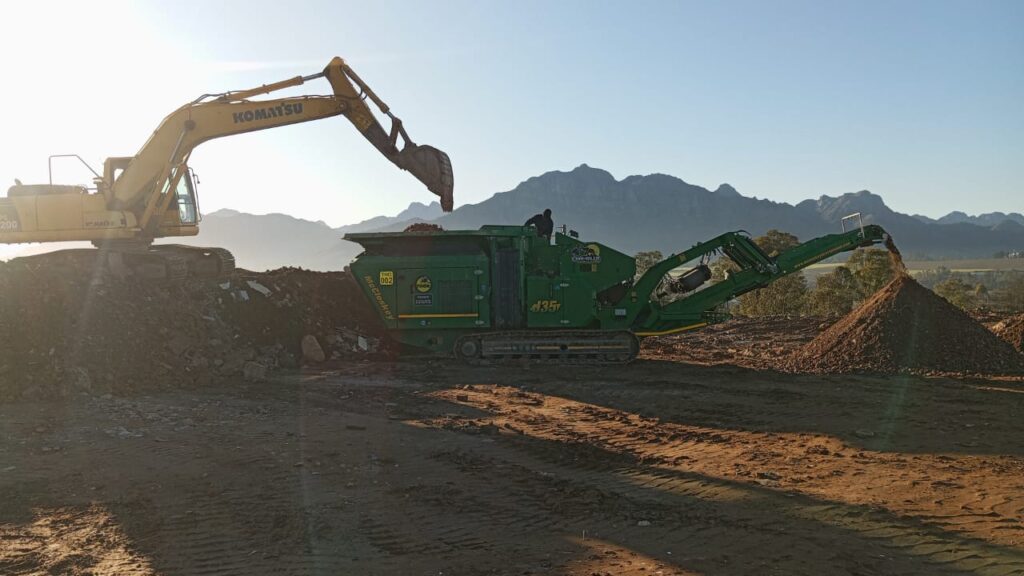
Thor Plant provides construction-material recycling, mobile crushing and screening. A site assessment determines whether the recoverable volume and proposed output justify processing.
Recycling performs best when the team keeps recoverable material clean from the start. Concrete mixed with timber, plastic, plaster, soil and general waste takes longer to sort. Contamination may also reduce the value or possible uses of the finished material.
Rubble Recycling vs disposal: the budget comparison
The better financial option depends on what each route avoids and what it adds. Disposal usually offers a simpler process. Recycling can recover value that the project would otherwise pay to remove.
| Budget factor | Disposal | Recycling |
|---|---|---|
| Site sorting | May still require separation | Requires planned separation for cleaner feed |
| Transport | Usually moves rubble off site | May reduce transport if processing occurs on site |
| Facility charges | Includes landfill or receiving fees | Residual waste may still attract disposal fees |
| Processing | Usually handled by the receiving facility | Project pays for crushing, screening and handling |
| Replacement material | Project may need to purchase aggregate or fill | Suitable output may replace part of that demand |
| Testing | Limited if the material leaves as waste | Required where the project needs verified performance |
| Site space | Needs loading and temporary storage space | Needs processing, access and separate stockpiles |
| Programme | Depends on trucks and receiving facilities | Depends on plant productivity and site coordination |
Use the same estimated quantity for both options. A rate per tonne means little without estimates for clean rubble, mixed waste and rejected material.
When does Rubble Recycling save money?
Rubble Recycling has a stronger commercial case when several cost advantages occur together. Avoided tipping fees alone may not justify the process, but reduced transport and lower demand for imported material can change the result.
Recycling may support the budget when:
- The site produces a substantial volume of concrete, brick, masonry or rock
- The team can separate material during demolition or site clearance
- Long haulage distances make off-site disposal expensive
- The project needs approved fill, aggregate or other processed material
- The site has safe access and space for equipment and stockpiles
- The programme allows crushing and screening to support later work
- A local user or buyer needs the processed output
The strongest savings often come from avoiding two journeys: sending rubble away and bringing replacement material back. The result depends on material suitability, engineering requirements and reusable volume.
Clean material also improves production. Early separation reduces sorting time, protects the finished stockpile and helps the operator plan the correct equipment. Poor separation turns a potential resource into an expensive mixed-waste problem.
When can disposal protect the budget?
Disposal can remain the better option when the recycling setup costs more than the material could save or recover. Small projects may not produce enough rubble to justify mobile plant. Tight urban sites may lack safe operating room.
Disposal may make more financial sense when:
- The project produces a small or irregular rubble volume
- Mixed waste dominates the stockpile
- Hazardous or contaminated material requires specialist handling
- The site cannot accommodate crushing, screening and stockpiles
- Noise, dust or operating-hour restrictions limit processing
- The project has no approved use or buyer for the output
- Testing and processing would cost more than compliant replacement material
- A suitable receiving facility operates nearby
Sending unusable material through a crusher does not create value. It adds handling and operating costs before the project disposes of the output anyway. The team should identify a realistic end use before committing to processing.
Why replacement material changes the calculation
Many comparisons stop at the waste gate. They price rubble removal but ignore the aggregate, fill or working-platform material needed later.
Processed rubble may offset part of that purchase if it meets the project specification. The engineer or other competent person must confirm suitability for applications that affect structural performance, drainage, pavement behaviour or compaction.
Crushing material to a convenient size does not prove its quality. The team may need to assess grading, strength, durability, contamination and moisture behaviour. Testing adds cost, but unsuitable material can cause far greater costs through rejection, removal or remedial work.
The South African Department of Transport’s COTO specifications provide requirements for road and bridge works, including earthworks, pavement layers and quality assurance. Projects should follow the relevant specification rather than treating every recycled product as interchangeable with quarried aggregate.
Legal and environmental costs still affect the budget
South Africa’s National Environmental Management: Waste Act regulates waste management, pollution prevention, licensing and contaminated land. Contractors must use lawful routes for material that remains waste and apply any relevant project, municipal and environmental requirements.
The National Waste Management Strategy 2020 supports waste prevention, reuse, recycling and recovery. Disposal sits lower in the waste hierarchy because it removes material from productive use and places pressure on disposal facilities.
Incorrect handling may lead to rejected loads, repeated transport, clean-up work, delays or enforcement action. A low quote offers little value if it excludes the correct waste route.
Did you know? CSIR guidance on construction and demolition waste identifies several places where waste affects project costs, including the original material purchase, labour, collection, storage, removal and landfill management. Waste costs more than the invoice from the receiving facility.
How to choose between disposal and Rubble Recycling
Build two complete cost scenarios before choosing. Use current quantities, distances, rates and project requirements.
Check:
- How much clean rubble will the project generate?
- Which materials can the team separate at source?
- What will disposal, transport and replacement material cost?
- What will crushing, screening, handling and testing cost?
- Does the site have safe access and enough operating space?
- Can the project use the processed material under its specification?
- What happens to rejected or contaminated material?
- How does each option affect the programme?
A combined approach often gives the best result. The team may recycle clean concrete and masonry, recover steel and send contaminated or unusable material to an authorised destination. This approach prevents the project from paying to process material with no useful outcome.
Conclusion
Disposal offers simplicity, especially for small, mixed or unsuitable loads. Recycling can lower total project costs when sufficient clean material, suitable site conditions and a verified end use support the process.
The budget should include every step: separation, loading, transport, receiving charges, processing, testing, residual disposal and replacement material. Teams that compare only one rate risk choosing the option that looks cheaper on paper and costs more on site.
Rubble Recycling gives projects the strongest financial advantage when it avoids disposal and replacement costs without compromising quality or compliance. Contact Thorhelical South Africa to assess your rubble volumes, site conditions and processing requirements before setting the waste budget.
FAQ
Is Rubble Recycling always cheaper than disposal?
No. Recycling usually needs sorting, suitable volumes, equipment, operating space and a clear use for the output. Disposal may cost less for small, contaminated or heavily mixed loads. Compare the full costs of both routes, including transport, receiving charges, processing, testing and replacement material.
Can crushed building material replace new aggregate?
It can replace some material when the processed product meets the project specification and intended use. Crushing alone does not prove suitability. The project may need testing and professional approval, particularly where performance affects structures, pavements, drainage or compaction.
Which construction materials offer recovery value?
Clean concrete, brick, masonry and suitable rock commonly offer recovery potential. Steel can also enter a separate recycling stream. Timber, plaster, plastics, soil and general waste should not contaminate the mineral rubble stockpile. Hazardous material requires specialist assessment and lawful handling.
Does recovery remove every disposal cost?
Usually not. Most projects still produce rejected material, contaminants or mixed waste that requires lawful disposal. The budget should include this residual fraction. Better separation can reduce it, but the project should not assume that the entire stockpile will become usable output.
Should a contractor plan waste handling before demolition starts?
Yes. Early planning helps the contractor separate material at source, estimate volumes, select equipment and reserve space for stockpiles. Waiting until demolition creates one mixed pile usually increases sorting, handling and disposal costs.
Not sure whether disposal or recycling will cost your project less? Contact Thor Plant for a site assessment and a practical comparison based on your rubble volumes, transport requirements and potential material reuse.