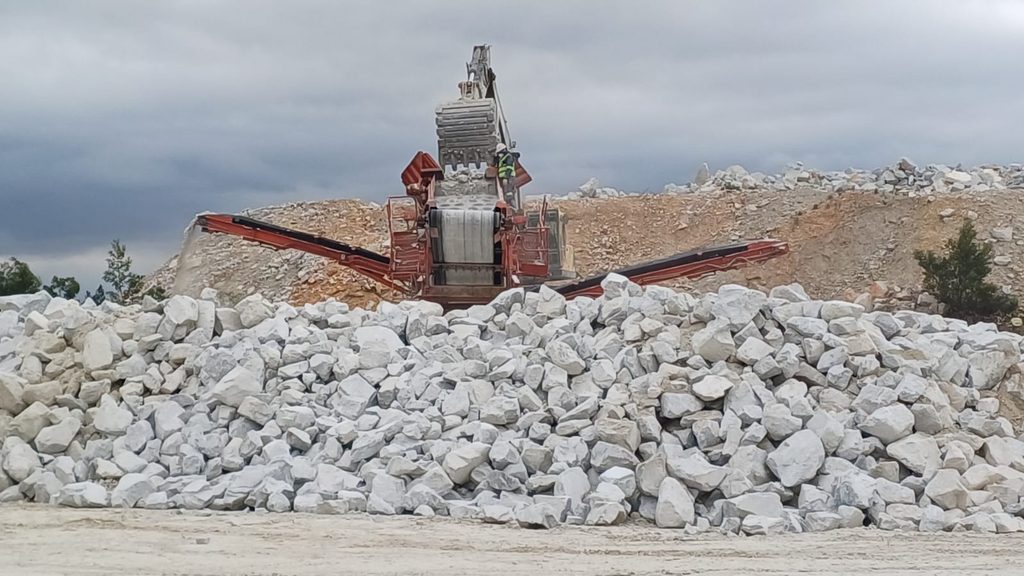
Mobile Crushing lets project teams process suitable demolition, construction, quarry and aggregate material where they generate it. A screening unit can then separate the output into useful size fractions for approved reuse, stockpiling or further handling.
That sounds efficient, but bringing equipment to site is not automatically the right answer. The decision depends on material volume, site access, contamination, required output, project specifications, programme and the real cost of moving material elsewhere. This guide explains when on-site crushing and screening make practical and commercial sense in South Africa.
What are Mobile Crushing and on-site screening?
Mobile Crushing uses transportable crushing equipment to reduce concrete, brick, rock and other suitable hard material into smaller sizes at or near the project site. Screening then separates the processed material by size so the team can manage oversize pieces, fines and selected aggregate fractions separately.
The two processes perform different jobs. Crushing changes the size of the feed material. Screening sorts material by particle size. A project may need one service or both, depending on the incoming material and how the team plans to use the output.
Thor Plant provides on-site crushing services and mobile screening services for construction, demolition, recycling and aggregate applications. Project teams should match the service to the site and specification because no crushed product suits every application.
When does Mobile Crushing make commercial sense?
The strongest case usually exists when a project has enough suitable material to justify mobilisation and a clear use or destination for the processed output. Avoided transport, disposal charges and imported aggregate may create savings. Project teams must weigh those savings against set-up, operating, labour, fuel, testing and site-management costs.
On-site processing may suit:
- Demolition projects producing significant quantities of concrete, brick or masonry
- Redevelopment sites where teams need recovered material for approved fill, working platforms or other specified applications
- Roadworks and civil projects generating or requiring graded material
- Quarries and aggregate operations that need flexible processing closer to the source
- Remote projects where long transport distances make off-site processing less attractive
- Sites with recurring material streams rather than one small, mixed load
The volume must be realistic. A large stockpile of clean, consistent concrete presents a different opportunity from scattered rubble mixed with timber, plaster, steel, soil and general waste. Material that requires extensive sorting or contains unsuitable substances may reduce productivity and increase handling costs.
A proper comparison should consider the full material journey. Sending rubble away involves loading, trucks, travel time, disposal or processing charges and possible return trips carrying replacement aggregate. Mobile Crushing can shorten that journey where the recovered material has an approved on-site use, but the team must base its calculation on actual quantities and distances.
Which materials suit on-site processing?
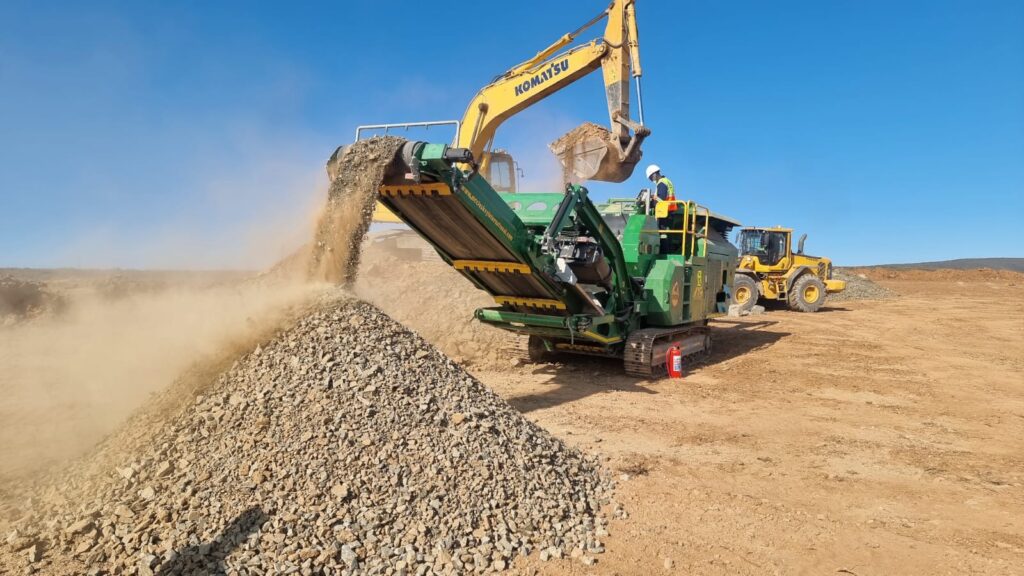
Suitability depends on the equipment, feed size, material condition and required product. Concrete, brick, masonry, natural stone and selected hard construction materials are common candidates, but the operator should inspect them before processing.
The following questions help define the feed material:
- Does the stockpile consist mainly of concrete, brick, stone or another crushable material?
- What are the largest pieces, and do they require pre-processing?
- How much reinforcing steel, timber, plastic, glass, soil or general waste does the stockpile contain?
- Could the material contain hazardous or contaminated substances?
- Can the equipment reach the stockpile safely?
- Should the team keep different material types separate?
Source separation matters. Cleaner feed gives the operator more control over the output and reduces unnecessary handling. It also prevents unsuitable waste from entering material intended for reuse.
Specialists must identify and lawfully manage suspected asbestos, contaminated soil, chemicals and other hazardous materials. Operators should never send them through a general crushing stream without the required assessment and controls.
The National Environmental Management: Waste Act provides South Africa’s framework for controlling waste-management activities, preventing pollution, licensing relevant activities and managing contaminated land.
How screening improves the value of crushed material
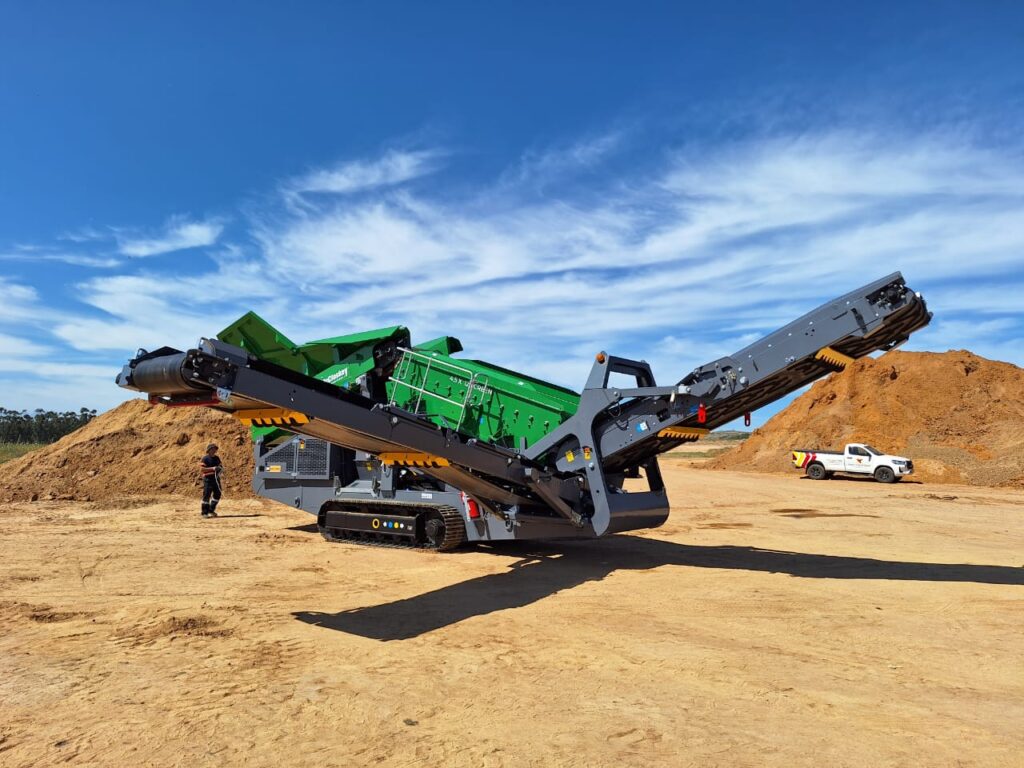
Crushing alone produces a range of particle sizes. Screening separates that mixture into selected fractions, which helps the team evaluate and allocate each stockpile. Operators may return oversize material for further crushing and direct finer or coarser fractions according to the project plan.
Screening can help a site:
- Produce more consistent size ranges
- Separate fines from larger aggregate
- Control oversize pieces
- Create distinct stockpiles for different approved uses
- Reduce repeated handling of mixed material
- Improve production records and stockpile management
Consistent sizing does not prove that a material suits a structural, pavement or drainage application. Gradation only measures part of its performance. Strength, durability, contamination, moisture behaviour and other properties may also matter.
Where teams intend to use the output for road or civil works, the engineer’s specification and applicable project standards remain decisive. The South African Department of Transport publishes the COTO Standard Specifications for Road and Bridge Works, including chapters covering earthworks, pavement layers and quality assurance.
The project team should test the material and confirm its suitability instead of judging it by appearance alone.
What must teams check before Mobile Crushing begins?
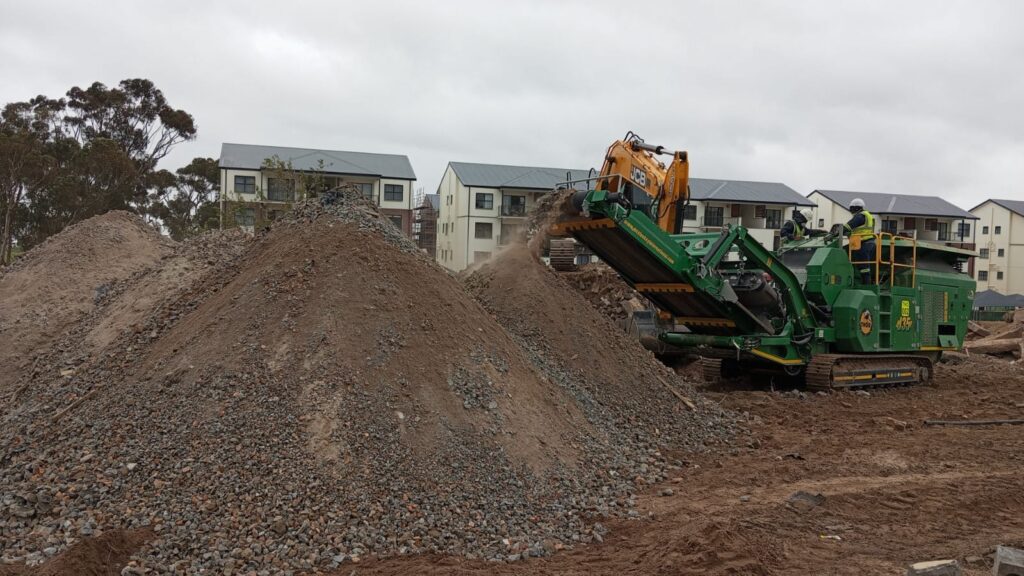
A site assessment should resolve practical constraints before the operator mobilises equipment. Space, access and material flow can determine whether the operation runs efficiently or loses time to repositioning, sorting and double-handling.
Key checks include:
- Quantity: Estimate the volume of suitable feed material.
- Access: Check gate widths, road conditions, turning space, gradients and ground conditions.
- Working area: Allow safe operating space for the crusher, screen, excavator, loading equipment and personnel.
- Stockpiles: Identify separate areas for feed, oversize, fines and finished products.
- Output: Confirm the required particle sizes, production target and proposed end use.
- Utilities and controls: Plan fuel arrangements, water availability and dust suppression.
- Neighbours: Consider nearby homes, businesses, roads and other sensitive areas.
- Programme: Coordinate demolition, processing and the work that follows.
- Compliance: Confirm waste status, permissions, environmental conditions and site-specific safety requirements.
The site layout should create a clear route from incoming material to processing and finished stockpiles. Poor planning can make trucks and machines cross paths, contaminate clean material or create unnecessary handling.
Mobile Crushing also creates operational impacts. The project team must control dust, noise, vibration, moving plant, stored energy, flying fragments and vehicle movements. The method statement and risk assessment should match the equipment, workforce, surroundings and feed material.
When on-site processing may not make sense
Mobile equipment offers flexibility, but project constraints still matter. Off-site processing or direct removal may prove more practical where volumes remain small, the site restricts movement or crews cannot separate the material safely.
On-site processing may not suit a project when:
- The site contains too little recoverable material to justify mobilisation
- Access cannot accommodate the equipment or support vehicles
- The team cannot safely separate people, machines and stockpiles
- Heavy contamination or mixed waste makes processing inefficient
- Noise, dust or operating-hour restrictions limit production
- The project has no approved use or viable destination for the output
- The process cannot achieve or verify the required material properties
- Processing would obstruct critical site activities
This explains why teams should not judge the opportunity by the visible size of a rubble pile alone. A smaller, clean stockpile with a defined use may offer more value than a larger mixed stockpile that requires extensive sorting and disposal.
How to compare on-site and off-site processing
The comparison should use the same project quantities and include every meaningful cost. A low crushing rate can look attractive until the team adds mobilisation, supporting equipment, water, testing and stockpile handling.
Off-site disposal can look simple until the calculation includes haulage, queueing, tipping charges and imported replacement material.
Compare:
- Plant mobilisation and demobilisation
- Crusher, screen and supporting equipment costs
- Operators, supervision and site labour
- Sorting and pre-processing
- Removal of unsuitable material
- Dust, noise, water and traffic controls
- Material sampling and laboratory testing
- Loading and repeated handling
- Haulage to an external facility or disposal site
- Disposal or processing charges
- Purchase and delivery of replacement aggregate
- Programme effects and potential delays
- Value of material retained for an approved use
Distance often influences the decision, but it does not settle it. Production rates, feed consistency and the required output can change the result. A site inspection and realistic material assessment should support the project-specific cost model.

Can projects reuse processed construction material?
Projects may reuse processed construction material when it meets the intended application, engineering requirements and applicable legal controls. Crushing and screening do not automatically turn waste into compliant construction aggregate. The team must still consider the end use, testing requirements and environmental duties.
Potential applications may include:
- Engineered or general fill
- Selected pavement layers
- Temporary working surfaces
- Landscaping layers
- Project-specific aggregate uses
These examples do not grant blanket approval. A competent person must confirm suitability where material performance affects safety, drainage, compaction or structural behaviour.
South Africa’s National Waste Management Strategy 2020 promotes waste prevention, recovery and a circular approach to material use.
The CSIR’s construction-waste demonstration project also shows how local processing and testing can turn selected construction and demolition waste into useful products. These principles support recovery, but they do not remove the need for quality control.
Thor Plant’s construction-material recycling service connects crushing and screening with a wider material-management plan. Processing creates the most value when it produces material for a defined, verified purpose instead of another stockpile without a destination.
How should teams plan a Mobile Crushing project?
Planning should begin before demolition or excavation mixes valuable material with general waste. Early discussion helps the project team identify recoverable streams, estimate quantities and reserve space for processing and stockpiles.
A practical plan should cover:
- Material types and estimated volumes
- Separation of concrete, brick, rock, steel and unsuitable waste
- Required equipment and supporting machines
- Feed preparation and maximum piece size
- Target output fractions and proposed uses
- Sampling, testing and acceptance responsibilities
- Dust, noise, traffic and safety controls
- Stockpile locations and drainage
- Disposal routes for rejected or contaminated material
- Production records and final material quantities
If demolition forms part of the same project, the sequence should protect material quality. Thor Plant also provides demolition services, so the team can coordinate demolition, sorting, crushing, screening and recycling as connected stages where appropriate.
Did you know? Screening does not improve weak or contaminated material by itself. It separates particles by size. The quality of the final product still depends on the feed material, crushing process, contamination controls and evidence that the output meets the required specification.

Conclusion
On-site processing makes the most sense when the site has a useful volume of suitable material, safe access, enough operating space and a defined purpose for the output. It can reduce unnecessary transport and support material recovery, but the team must plan the full operation and confirm that the product meets project requirements.
Base the decision on a site assessment and cost comparison rather than assuming that on-site processing will always save money. Material quality, contamination, testing, environmental duties, safety controls and programme effects all influence the answer.
For contractors, developers, demolition teams, mines, quarries and recycling operations, Mobile Crushing can create practical value when the material and project suit the process.
Contact Thorhelical South Africa to arrange a site assessment and find out whether Mobile Crushing and screening suit your material, site and project requirements.
FAQ
What is the difference between Mobile Crushing and screening?
Mobile Crushing reduces suitable concrete, brick, rock or masonry into smaller material. Screening separates the output into selected size fractions. A project may use crushing without screening, screening without crushing or an integrated process. The feed material, required output, site constraints and intended use determine the correct arrangement.
How much material justifies on-site crushing?
No universal minimum applies because mobilisation distance, plant choice, material condition, production rate and avoided transport all affect viability. A contractor should estimate the recoverable volume and compare the complete on-site cost with removal, off-site processing, disposal and replacement-material costs. A site assessment provides a more reliable answer than a volume estimate alone.
Can teams reuse demolished concrete after crushing it?
Potentially, but crushing alone does not certify concrete for reuse. The material must meet the required size and remain free from unacceptable contamination. Engineered applications may require testing and professional approval. The intended use and project specification determine whether the recovered material qualifies.
Does on-site crushing eliminate disposal costs?
Not always. Teams may recover clean, suitable material, but they may still need to remove reinforcing steel, mixed waste, hazardous substances, contaminated fines and rejected material lawfully. The commercial assessment should include sorting, residual waste and anything the project cannot reuse or sell.
How much site space does crushing and screening need?
A crushing operation needs space for processing equipment, excavators or loaders, safe access, feed material and separate finished stockpiles. The equipment and production plan determine the exact requirement. Restricted sites may still work, but limited manoeuvring room and repeated handling can affect safety, output and cost.
Who provides Mobile Crushing in South Africa?
Thor Plant provides crushing, screening, demolition and construction-material recycling services for relevant South African projects. The team can review the site, material type, expected volumes, access and required output before recommending an operating approach.
Contact Thorhelical South Africa to arrange a site assessment and find out whether mobile crushing and screening suit your material, site and project requirements.